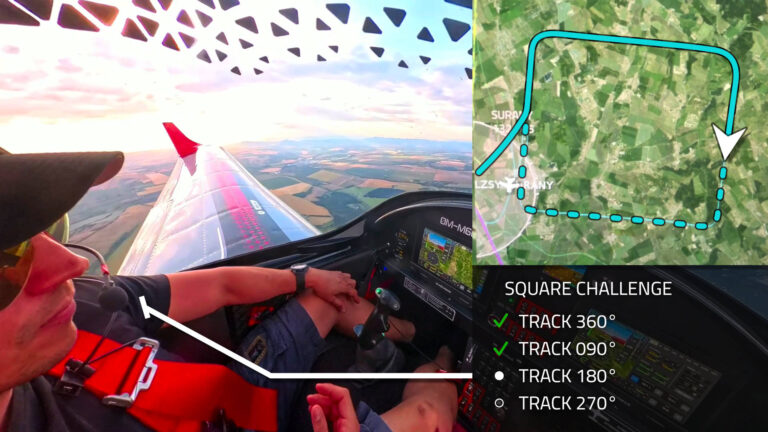
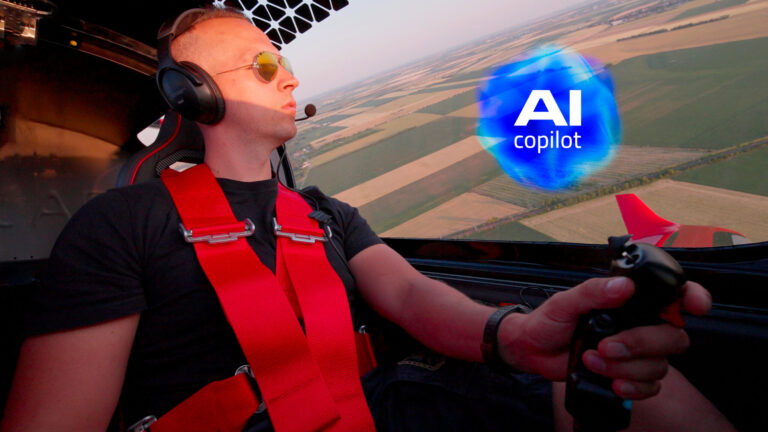
If you’ve been following general aviation news lately, the idea of an AI copilot for small aircraft has probably crossed your radar. It sounds futuristic — maybe even a little unsettling. Does it mean the aircraft flies itself? Are we talking about replacing the pilot?
Not quite. And the honest answer is far more interesting than the hype.
An AI copilot for a small aircraft isn’t about removing the human from the controls. It’s about giving solo pilots something they’ve never really had: a system that doesn’t just display information — it reasons across all of it simultaneously, pulling together weather, navigation, traffic, and aircraft data to give you a coherent picture instead of a pile of inputs. Think of it as upgrading from a cluttered desk covered in sticky notes to a single intelligent layer that connects all the dots in real time.
The catch? These systems have real limitations — and understanding them matters just as much as knowing what they can do. In this article, we’ll walk through what AI avionics actually mean in a general aviation context, how they work in practice, and what to realistically expect if you’re thinking about an upgrade.
The State of the Average GA Cockpit
Let’s start with the problem, because most pilots know it well.
Walk into a typical light aircraft — a Cessna 172, a Piper Cherokee, a Van’s RV — and you’ll find a patchwork of instruments that were never designed to work together. There’s an analog altimeter, a separate GPS tablet strapped to the yoke, a handheld radio that may or may not be charged, and a weather app on your phone you checked before departure but can’t update in flight.
FAA human factors research has long established that information overload and divided attention are among the primary contributors to pilot error in general aviation. Flying solo without integrated tools means constantly switching context — instruments, radio, weather, navigation, each demanding a share of your attention. It adds up faster than most pilots expect.
This is the core problem that AI avionics aim to solve. Not by taking over, but by reducing the noise.
What Does “AI Copilot” Mean in a Small Aircraft?
The phrase gets used loosely, so it’s worth being specific — because there are actually two distinct layers to understand.
The first layer is the individual cockpit features. A capable integrated avionics platform handles multiple data streams simultaneously, each doing its own job:
- Real-time ATC transcription. The system listens to ATC communications, transcribes them automatically, and extracts key instructions — headings, altitudes, frequencies. Each component displays clearly for the pilot to review and confirm. SKYbrary identifies miscommunication as one of the leading contributing factors in ATC-related incidents, which makes this feature particularly valuable.
- Voice-controlled autopilot. Pilots issue commands verbally — “track direct to the next waypoint,” “reduce speed to 90 knots” — and the autopilot responds. No need to look away from the flight path to navigate a menu.
- Live satellite weather. Real-time METARs, SIGMETs, and AIRMETs via satellite connectivity — continuously en route, not just at departure.
- 3D synthetic vision. A rendered terrain map for clear spatial awareness in low-visibility or mountainous environments.
- Engine and systems monitoring. All aircraft parameters on one screen, with alerts for anything outside normal range.
- Live traffic awareness. ADS-B integration that shows traffic in real time alongside your flight path.
But what makes a true AI copilot different from a well-designed display is what happens across all of these at once — and that’s the second layer.
The Reasoning Layer: Where It Gets Interesting
The most advanced systems include an on-board conversational reasoning layer that synthesises information from every cockpit source simultaneously. Rather than showing you a weather map, it assesses conditions along your specific route. It cross-references METARs, TAFs, radar, cloud layers, freezing level, and visibility against your active flight plan, current altitude, and aircraft performance parameters. When an AFM, engine manual, or SOP is loaded, you can ask questions tied to your actual situation and receive the relevant document section alongside your live instrument data.
This reasoning layer can also check the full route for airspace conflicts at your planned altitude, identify required reporting points, and provide a terrain clearance profile. It summarises nearby traffic with relative altitude, bearing, and distance — on demand, in plain language. When action is needed — adjusting the flight plan, changing a radio frequency, modifying autopilot parameters — the system can execute on instruction. The pilot confirms explicitly before the system acts.
That’s the distinction worth understanding — and it’s why Schochman describes the AI Glass Cockpit as a cockpit that thinks: not just a smarter display, but an integrated reasoning layer built into the avionics stack.
What an AI Copilot Can’t Do
This part matters most, so let’s be direct.
An AI copilot cannot replace pilot judgment. It doesn’t know you’re fatigued, that you’re unfamiliar with the local airspace, or that the go/no-go call you made this morning was borderline. It processes data — it doesn’t make decisions for you.
Here’s what current AI avionics systems can’t do:
- Override your inputs. If you choose to continue into deteriorating weather despite the alerts, the system will warn you — but it won’t stop you. That decision belongs to the pilot.
- Replace training or currency. AI avionics are tools for competent, trained pilots. They don’t teach you to fly, and they don’t compensate for gaps in airmanship.
- Guarantee perfect communication. ATC transcription is highly accurate but not infallible. Pilots should always confirm critical clearances using standard read-back procedures. The FAA Aeronautical Information Manual is unambiguous on this point.
- Operate without the pilot. These are not autonomous systems. The pilot remains pilot-in-command at all times, under all conditions.
Understanding these limits isn’t a knock on the technology — it’s a sign of how mature and honest it is. The best aviation tools amplify pilot capability rather than trying to substitute for it.
Real-World Use: A Day with AI Avionics
Let’s put this in practical terms.
You’re a solo pilot in a single-engine aircraft, planning a 200-nautical-mile cross-country. Weather is partly cloudy with a few patches of reduced visibility near your destination. This is where integrated AI avionics earn their place.
Before departure, your glass cockpit pulls current METARs and TAFs via satellite connectivity and flags the restricted visibility area ahead. You adjust routing and file accordingly.
En route, approach control issues an altitude restriction and a traffic advisory in the same transmission. Rather than splitting your attention between the radio and a kneeboard, the transcription layer pulls both instructions into readable text on your primary display. Each component sits clearly on screen, ready to act on. You confirm the altitude restriction, brief the traffic, and stay focused on the external picture.
Forty minutes from destination, a SIGMET activates for convective activity on your original route. The system doesn’t just overlay a boundary on the moving map. It cross-references the affected area against your current altitude, your aircraft’s performance parameters, and the weather picture ahead — then tells you what it means for your flight specifically. You ask: “What does tracking south of the cell at 7,500 feet look like?” The system checks the terrain profile on that track, the airspace structure, and the updated weather picture, and comes back with a clear assessment. You make the call, request the deviation from ATC, and the flight plan updates on-screen with your confirmation.
None of this is magic. You’re still flying the aircraft, making the calls, and talking to ATC. But you’re doing it with significantly less cognitive clutter — and that margin matters when conditions get complicated. The AOPA Air Safety Institute has long documented how pilot workload management is one of the key factors separating routine flights from incidents.
Is an AI Copilot Right for Your Aircraft?
The honest answer depends on what you’re flying and what you’re trying to solve.
For solo pilots in complex or controlled airspace, AI-assisted avionics reduce cognitive load precisely during the phases of flight that demand the most — departures, arrivals, weather deviations, and frequency-congested environments. For owners with aging analog panels, a retrofit to an integrated glass system improves situational awareness across the board. And for experimental aircraft and light-sport builders, the regulatory flexibility for E-AB and E-LSA aircraft opens the door to avionics integrations that type-certificated aircraft simply can’t access.
What these systems are not designed for — at least for now — is flying the aircraft on your behalf. They’re designed for pilots who already know what they’re doing — and want to do it with better, more integrated information.
The Schochman AI Glass Cockpit is one example of this approach in practice. It’s a unified avionics platform built for general aviation, combining ATC transcription, voice autopilot control, live weather, synthetic vision, and engine monitoring — with an on-board AI Copilot that reasons across all of them simultaneously, answering route-specific questions and providing contextual analysis on demand. The pilot confirms every action the AI suggests before the system executes it. Whether or not it’s the right fit for your panel, the direction this technology is heading is worth following closely.
The Bottom Line
The idea of an AI copilot in a small aircraft is less science fiction than it sounds — and more practical than the marketing sometimes suggests.
These systems are real and the technology is advancing quickly. Decades of accident research back the case for better-integrated cockpits, linking cognitive overload and fragmented tools directly to pilot error. But the core message is simple: AI avionics are tools for trained, capable pilots. They reduce cognitive overload, improve situational awareness, and help you make faster, better-informed decisions. They don’t replace the skill, the judgment, or the responsibility that comes with being pilot-in-command.
If you’re curious about what the next generation of GA avionics looks like in practice, it’s a good time to start exploring — both what’s available today and what’s coming next for the general aviation panel.