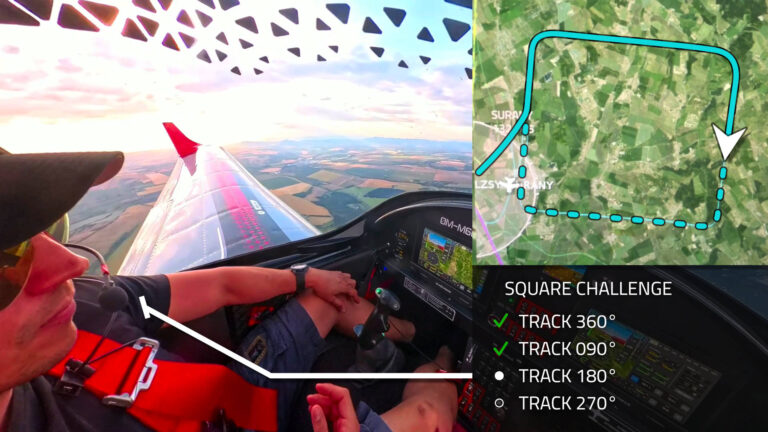
From childhood I knew one thing – airplanes would always be part of my life. My passion for aviation technology was evident from the beginning. First small models, later at FEI STU in Bratislava I founded a student team for autonomous drones, where we worked with accelerometers, gyroscopes, and Kalman filters as if they were LEGO bricks with PID controllers and own autopilot system. In our designs, we also explored the concept of integrating a glass cockpit for enhanced flight control and data visualization. We also needed a proper human–drone interface, so we created our first ground stations in portable cases and control panels.

We used OpenGL, maps, a custom HUD with live video streaming from the drone… and to be honest, it cost us over ten crashed UAVs (when your team starts calling every test “probably another crash,” you know you’re developing something right 😅). But all those years became the foundation of a bigger dream: to one day build my own glass cockpit.
👉 Curious about what defines a glass cockpit today? Check out What is a glass cockpit and how does it work?


From Training Aircraft to a Digital Flight Deck
Playing with UAVs wasn’t enough. I wanted to understand the cockpit from the pilot’s seat. That’s why I earned my PPL, built two Dova Skylark aircraft from kit, and logged hundreds of hours across Europe.
One of my very first flights after getting my license was from Bratislava to Parma – to pick up my aunt. When I told people at school, they looked at me like I’d gone mad: “You’re a fresh pilot, renting a plane, flying across half of Europe… to pick up family?!” ✈️😅 Before the flight I could barely sleep, I had so much adrenaline. I prepared everything: routes, alternates, notes, weather, contingency plans. And when I landed, it was pure freedom – and proof that with preparation, anything is possible.
Why Many Pilots Stay “Local”

I quickly noticed that many fellow pilots never dared to fly beyond the familiar. Why?
- ATC communication. Not just ICAO English, but noisy radios and heavy accents (Italian controllers through static are a real boss level).
- Weather. Over the Alps, conditions can change faster than your instructor’s mood after your third bad landing.
- Unknown airspace. Active zones, maps, procedures – stress and uncertainty everywhere.
The result? Many pilots who could fly half of Europe stay confined to local hops.
👉 Learn more in How ADS-B and synthetic vision improve flight safety.
Today’s Cockpits: Too Many Apps, Not Enough Integration
The truth is, today’s systems do provide apps – but isolated ones. One app for weather, another for ATC-to-text, another for navigation… and the pilot has to manually connect the dots. In turbulence, that’s pure fun – ever tried typing on a tablet that’s bouncing around the cockpit? 😅
And in these moments, priorities often flip. Instead of Pilot – Navigate – Communicate, it becomes Communicate – Navigate – Pilot. That’s when mistakes happen.

👉 Dive deeper into our avionics backbone in Embedded systems & AI avionics research.
Our Vision: The Cockpit of the Future

Here’s where the revolution begins. Our glass cockpit stands on three pillars:
- Ease of Use. Voice control through offline AI, capable of directly tuning radios, setting transponder codes, autopilot, and navigation.
- Realtime Awareness. With 5G modules or Starlink Mini, the pilot gets live weather, radar layers, satellite images, NOTAMs, METARs, and TAFs. No compromises.
- Integration. No more juggling apps – everything is seamlessly connected in one system. Phones and tablets become backups, not primary tools.

👉 See how this looks in practice: 3D airspace visualization & synthetic vision.
AI That Understands You
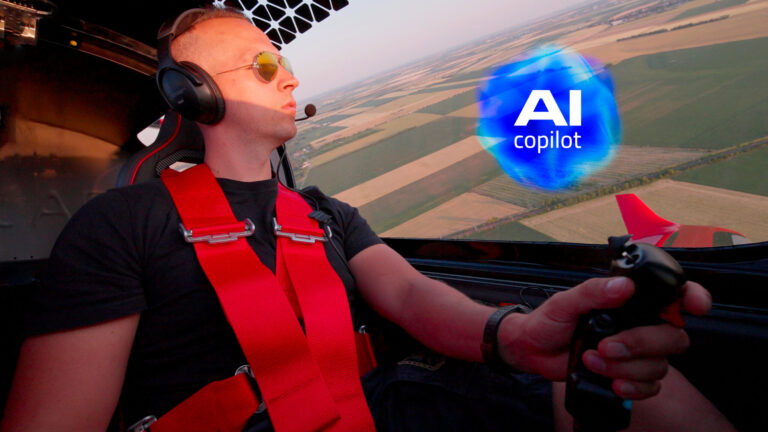
The real game-changer is our ATC AI system in glass cockpit, which extracts critical data from radio calls – squawk, QNH, waypoints, altitude, heading, frequencies – and presents it clearly in a table. The pilot just verifies and confirms. No more endless “say again please?” while dodging a thunderstorm cloud.
The AI can even suggest automatic readbacks or ATZ calls, saving time and keeping the pilot’s focus where it belongs – hands on the controls, not on a touchscreen.
Conclusion: A New Way of Flying with the AI Glass Cockpit
This is not just another display. This is a new way of flying. A glass cockpit that combines simplicity, live data, and AI assistance.
We want pilots to stop wondering if they’re capable of flying across mountains or borders – and start knowing they can.
And yes – it may sound revolutionary.
That’s because it is. ✈️🚀
👉 Learn more at Schochman.com
For more about aviation safety and cockpit technology, see: