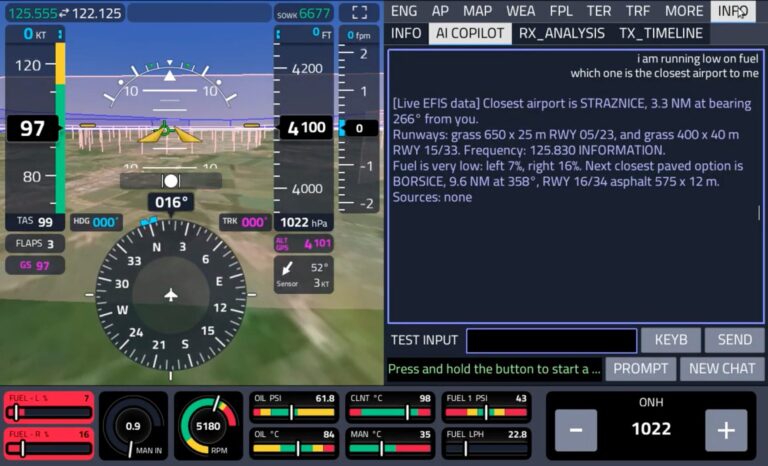
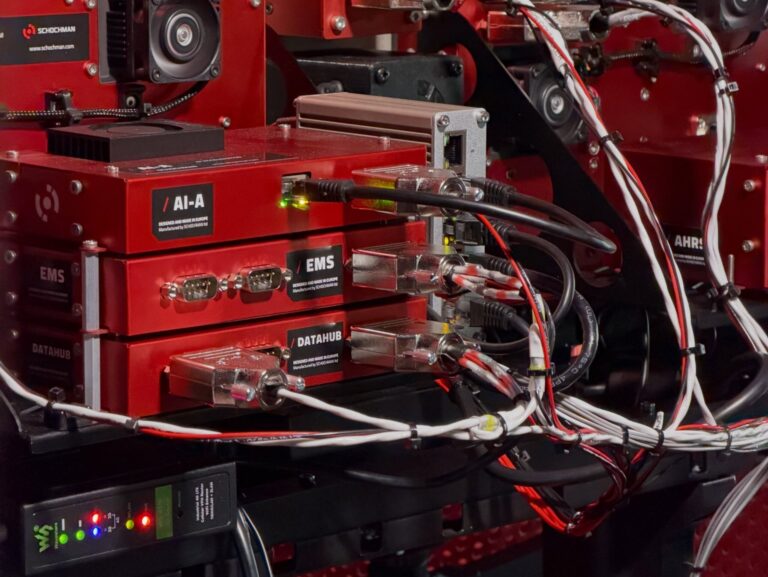
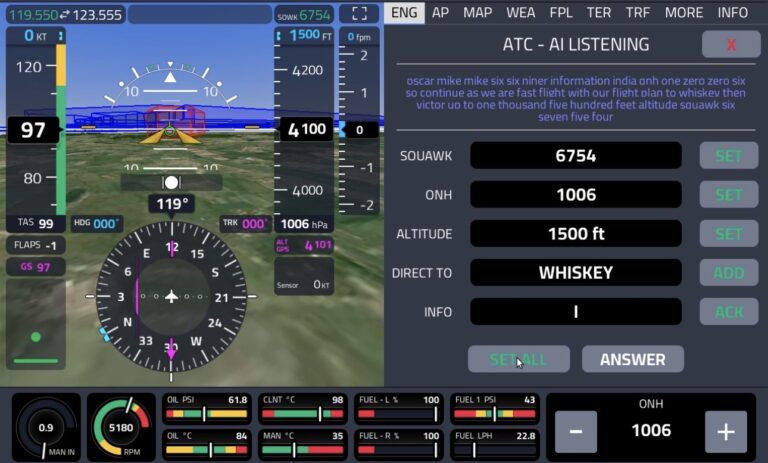
In aviation, one simple rule holds true: the more information a pilot has, the better decisions they can make. Modern technology brings two powerful tools that are transforming the way we fly – ADSB and Synthetic Vision, both fully integrated into the Schochman AI Glass Cockpit. ADSB, or Automatic Dependent Surveillance-Broadcast, is particularly revolutionizing aviation by enhancing safety and situational awareness.

What Is ADSB and Why It Matters
ADS-B (Automatic Dependent Surveillance – Broadcast) is a system that allows aircraft to broadcast their exact position, speed, and altitude. These signals are received by:
- Other aircraft – so pilots can see surrounding traffic directly on their cockpit display.
- Ground stations – giving air traffic control a more accurate picture of the skies.
👉 Learn more about the FAA ADS-B Program.
Benefits of ADS-B Technology
- Greater traffic awareness – even when other aircraft are hidden by clouds or distance.
- Improved separation – reducing the risk of near misses.
- More efficient routing – fewer unnecessary detours.
For pilots and avionics engineers, ADS-B is more than compliance—it’s a core safety feature of next-generation cockpits.
What Is Synthetic Vision with ADSB in cockpits?
3D Terrain Awareness with Integrated Flight Information
Synthetic Vision Systems (SVS) use terrain databases and 3D graphics to create a realistic view of the landscape ahead of the aircraft. On the display, the pilot can “see” mountains, valleys, and airports—even in fog, darkness, or poor weather.
Benefits of Synthetic Vision
- Enhanced situational awareness – clear understanding of terrain and obstacles.
- Reduced CFIT risk (Controlled Flight Into Terrain) – one of the leading causes of accidents.
- Easier navigation in unfamiliar areas.
When ADS-B Meets Synthetic Vision
Together, these technologies provide two critical perspectives:
- ADS-B shows other aircraft and traffic.
- Synthetic Vision shows terrain and obstacles.
The result is a complete situational picture for pilots—regardless of visibility.
Check out the live global ADSB Exchange Tracker to see how real-time aircraft broadcasts look in practice.
The Schochman AI Glass Cockpit with ADS-B
Traffic information screen on Schochman EFIS system.
At Schochman, we enhance ADS-B and Synthetic Vision by adding:
🛫 ADS-B integrated directly into the Synthetic Vision display
🗣️ Voice Alerts for terrain and traffic conflicts
🎧 ATC Transcription for instant understanding of clearances
🌐 Real-Time Data Connectivity via Starlink or GSM
Read more about our AI avionics research and the journey behind building our glass cockpit.
A Deeper Look at ADS-B Messages
ADS-B isn’t just a radar blip. It broadcasts once per second on 1090ES or 978 UAT, including:
- Aircraft identification and ICAO address
- GNSS position (15–30m accuracy)
- Altitude and climb/descent rate
- Speed, heading, and track angle
- Emergency codes and integrity flags (in extended ADS-B Out)
Because ADS-B updates faster than radar sweeps, pilots and ATC get a near real-time traffic picture.
Why ADSB Technology Matters for Pilots
ADS-B provides:
- Cockpit traffic displays with immediate awareness
- Collision avoidance support in VFR and IFR conditions
- Integration with Synthetic Vision for a 3D view of terrain and traffic
- Improved separation in busy or remote areas
That’s why ADS-B is now required in controlled airspace across the US, Europe, and many other regions.
Conclusion
Flight safety no longer depends only on pilot skill—it depends on modern tools like ADS-B and Synthetic Vision. Together, they transform aviation from estimation to real-time precision.
👉 Want to see how it works in practice? Visit us for a demo at LZDV (Dubová Airfield) or email us at info@schochman.com.
Flying with Schochman AI Glass Cockpit means freedom, intelligence, and peace of mind.