
The Second Pair of Eyes: How AI Can Save Lives in General Aviation

Roughly seven in ten GA accidents are pilot-related: weather, terrain, traffic, engine and radio, all watched by one overloaded pilot. Here is how an AI copilot acts as the second pair of eyes airlines have had for decades.
What Is an AI Copilot for a Small Aircraft? Capabilities, Limits, and Real-World Use
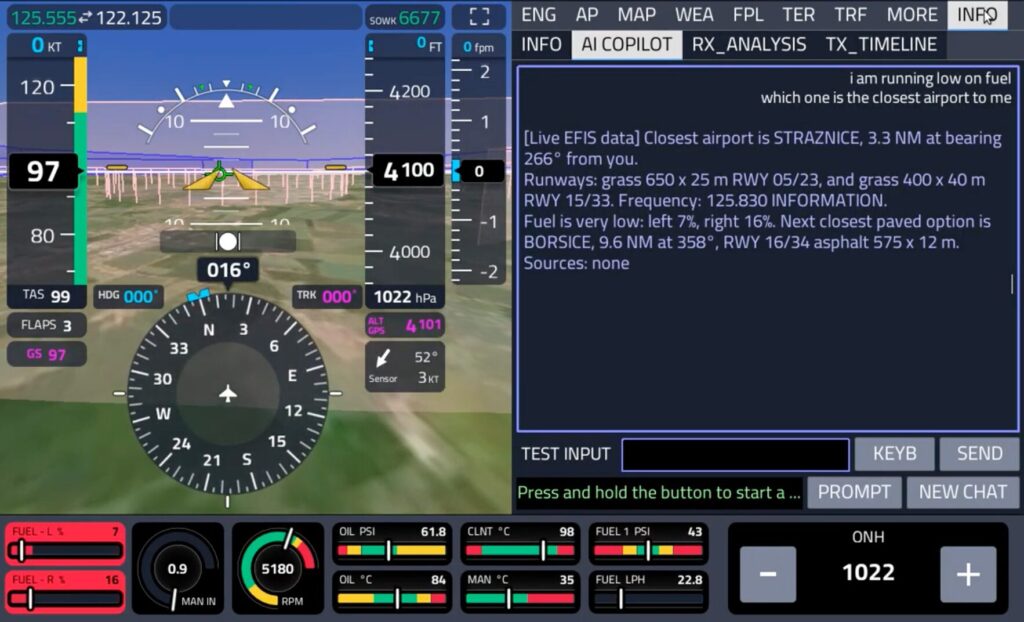
If you’ve been following general aviation news lately, the idea of an AI copilot for small aircraft has probably crossed your radar. It sounds futuristic — maybe even a little unsettling. Does it mean the aircraft flies itself? Are we talking about replacing the pilot? Not quite. And the honest answer is far more interesting […]
How Pilots Miss ATC Clearances — And What Technology Can Do About It
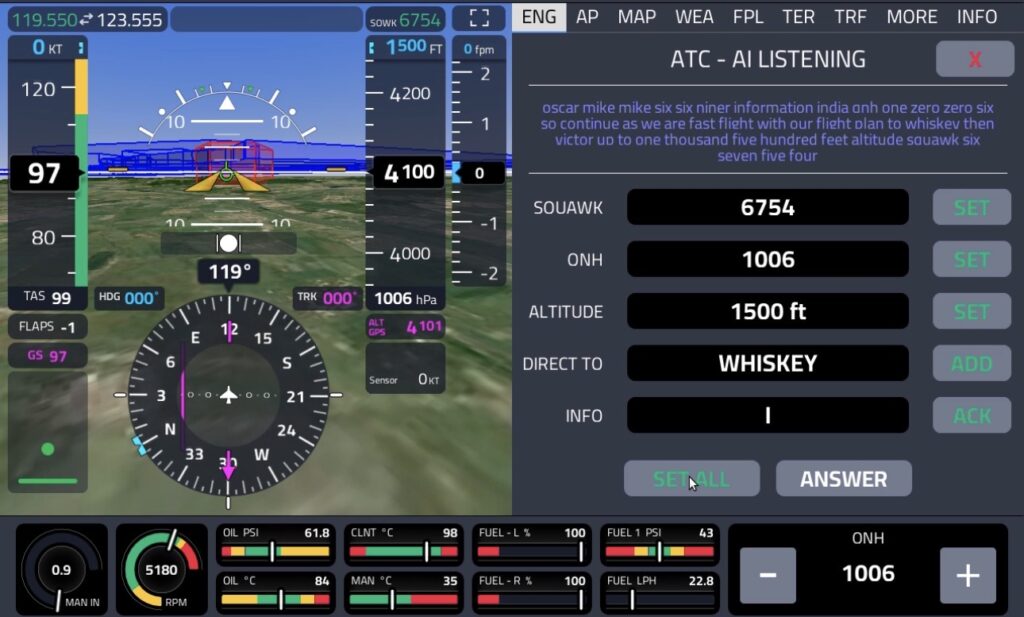
You’re climbing through 4,500 feet, managing your airspeed, scanning for traffic, and keeping an eye on a building cloud to the southwest. Then the radio crackles. ATC rattles off a clearance — a heading change, a new altitude, maybe a frequency handoff — and just like that, three things happened at once. Did you catch […]
Voice Control in the Cockpit: How It Works, and Why It Matters in Turbulence
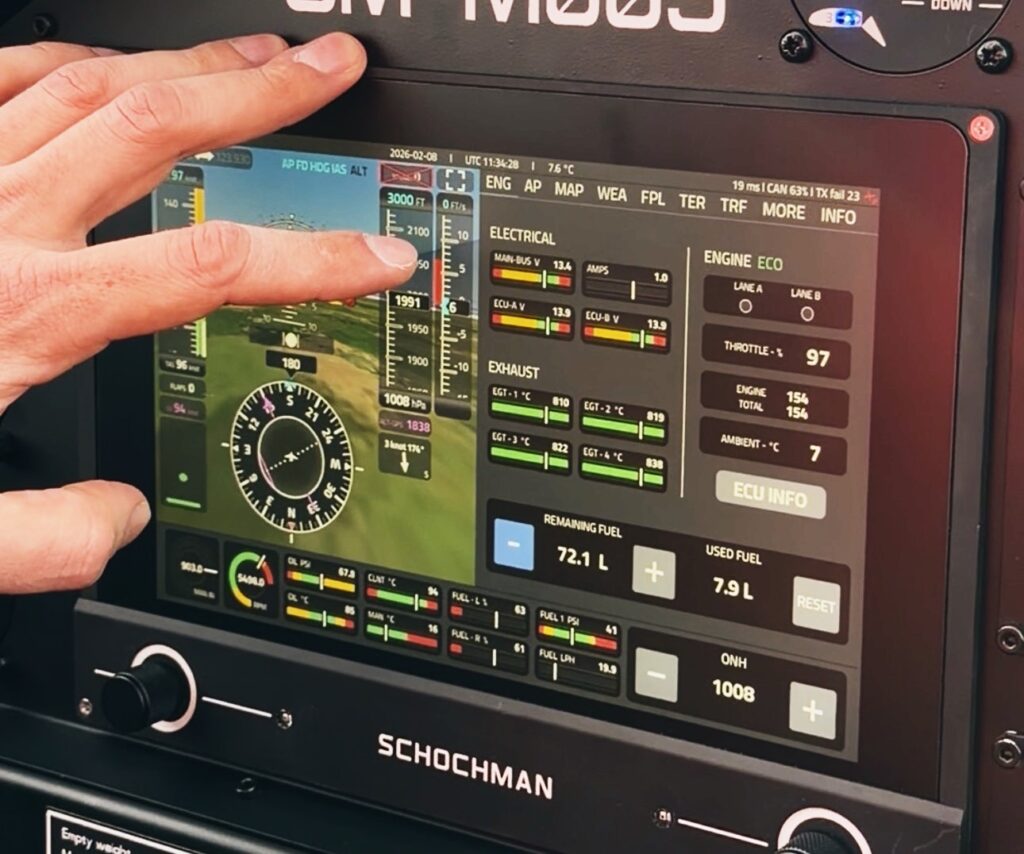
For decades, general aviation pilots have managed a cockpit filled with disconnected instruments, radios, and navigation tools. In modern aviation, voice control in the cockpit is emerging as a major shift in how pilots interact with aircraft systems. Instead of relying only on buttons, knobs, and touchscreens, pilots can now use spoken commands to manage […]
AHRS Sensors and Sensor Fusion in Avionics: A Pilot’s Guide

Modern drones, robotic autopilots, and advanced cockpit systems rely on an Attitude and Heading Reference System (AHRS) to know their 3D orientation. An AHRS typically combines three sensors inside an IMU: a gyroscope, an accelerometer, and a magnetometer. Each sees the world differently: gyros sense rotation, accelerometers feel forces (including gravity), and magnetometers point to […]
3D Airspace Visualization for Pilots: A New Dimension in Flight

At Schochman, we are building a next-generation cockpit engine for 3D Airspace visualization. Instead of a flat map with colors and lines, pilots will see airspaces as volumes — textured, layered, and real. Our synthetic vision technology renders terrain, aircraft position, and airspaces in three dimensions, all in real time. Why 3D Airspace Visualization Matters […]
ADSB and ADS-B Synthetic Vision Improve Flight Safety

In aviation, one simple rule holds true: the more information a pilot has, the better decisions they can make. Modern technology brings two powerful tools that are transforming the way we fly – ADSB and Synthetic Vision, both fully integrated into the Schochman AI Glass Cockpit. ADSB, or Automatic Dependent Surveillance-Broadcast, is particularly revolutionizing aviation […]
What Is a Glass Cockpit and How Does It Work?

Step into the cockpit of an older aircraft and you’ll be greeted by the classic “six-pack”: six round analog gauges, each faithfully showing one piece of information. Altitude here, speed there, heading in another corner—it works, but it requires constant scanning and focus. Modern cockpits look very different: large digital displays, crisp graphics, and integrated […]